Guide · Sourcing6 min readUpdated

What is AI sourcing?

Short answer

AI sourcing is the use of AI to find potential candidates who have not applied: it reads a vacancy, turns it into a search strategy, searches talent sources, removes duplicates and ranks every profile against the full set of requirements with reasons. Recruiters review the shortlist and decide who to approach and hire.

An orange beam of light passing through a row of white and black rings.

What does sourcing mean in recruitment?

Sourcing is the part of recruitment where you actively look for people who could fit a role, instead of waiting for applications. Most of those people are not looking for a job; they are passive candidates who will only move for the right offer at the right moment.

Classic sourcing is manual work: a recruiter reads the vacancy, talks to the hiring manager, writes search strings, scrolls through profiles on LinkedIn and other sources, keeps a list and writes messages. It works, but it scales with hours. A recruiter who is good at it is also the person you need in client meetings and interviews.

AI sourcing automates the search and assessment part of that work. The goal is not a bigger list, but a shorter, better-reasoned list that a recruiter can check in minutes.


How does AI sourcing work, step by step?

A good AI sourcing workflow follows the same logic as an experienced sourcer, but runs each step consistently for every vacancy.

Step 01 ·

Read the vacancy

The AI separates hard requirements from preferences and maps job titles, sectors, skills and likely career paths. A 'medior Java developer' becomes a set of adjacent titles, frameworks and seniority signals. See vacancy intelligence.

  • Must-haves vs nice-to-haves
  • Adjacent job titles
  • Seniority and career path signals
A flat lay of paper, black and orange blocks with a magnifying glass: a vacancy broken into search signals.

Step 02 ·

Search the market

Instead of one Boolean string, the system runs several search routes across available talent sources and removes duplicates and clearly irrelevant profiles as it goes.

  • Multiple search routes
  • Deduplication
  • Irrelevant profiles filtered out
A black magnifying glass over a stack of cards, one orange card under the lens: searching the market.

Step 03 ·

Rank against the full vacancy

Every candidate is scored against all requirements, with a reason: matching experience, missing requirements and risk factors such as short tenures or a location mismatch.

  • Score with reasons
  • Missing requirements visible
  • Risk factors flagged
Many white spheres narrowing into a single line that ends in one orange sphere: ranking candidates.

Step 04 ·

Hand over to the recruiter

The recruiter reviews the shortlist, removes or adds people and approves outreach. In an agentic setup the system can also draft personal messages and follow up, within rules the team sets.

  • Recruiter reviews the shortlist
  • Outreach only after approval
  • Uncertain cases go to a person
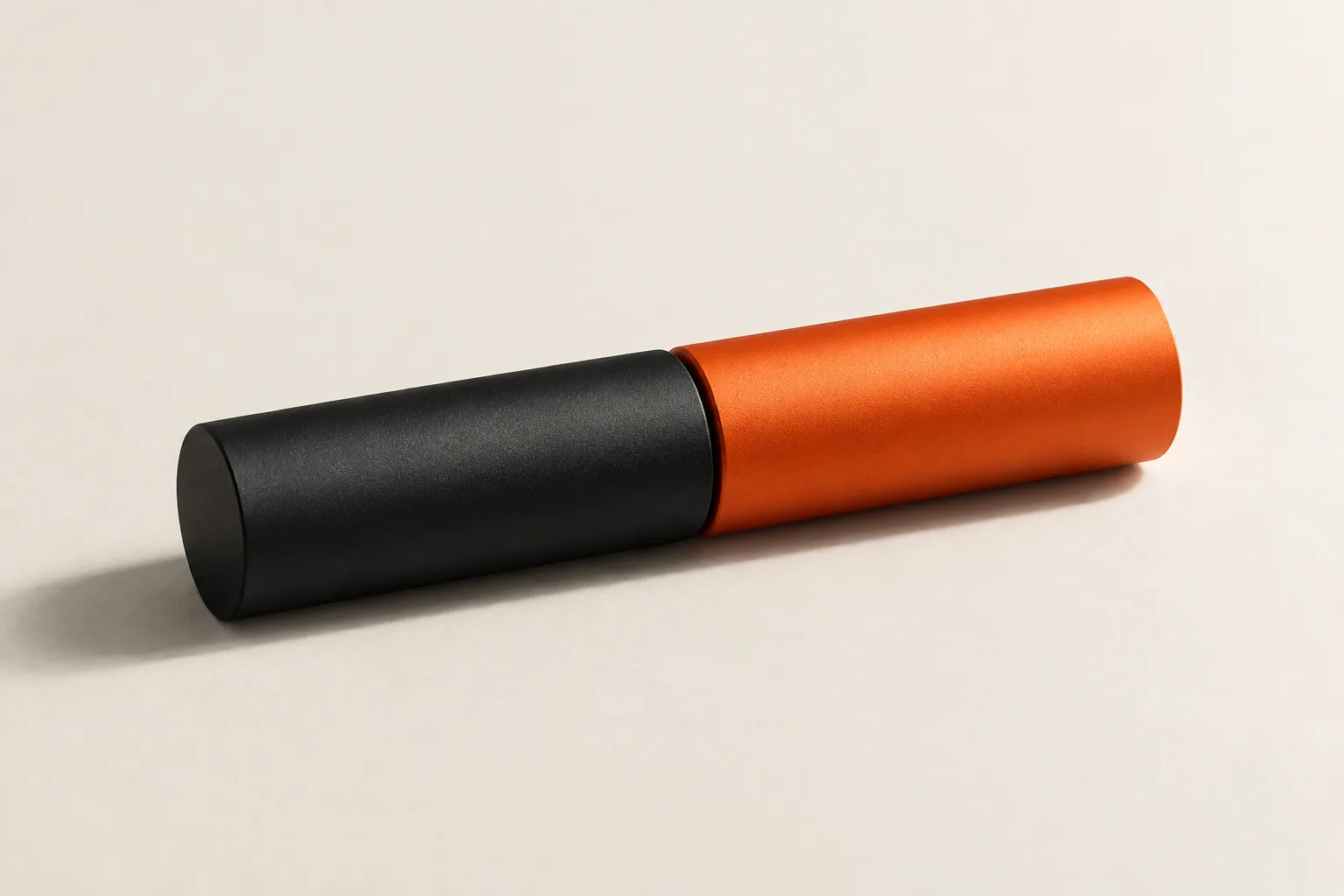
A black and an orange cylinder touching end to end: the handover from agent to recruiter.

The recruiter's time moves from searching to judging: who is worth a conversation, and why.

How is AI sourcing different from Boolean search and ATS matching?

The three are often mixed up. They solve different problems and often work side by side.

Boolean search
ATS matching
AI sourcing
Who it looks at
Anyone in the source you search
Candidates already in your ATS
People in available talent sources, most of whom never applied
How it matches
Exact keywords and operators you write
Keyword or skills overlap with the job
Requirements, adjacent titles, career paths and context
Output
A long unranked result list
A match score per applicant
A ranked shortlist with reasons per candidate
Strength
Precise and transparent, fully in your control
Reuses candidates you already know
Consistent, covers more of the market per vacancy
Weak spot
Misses synonyms and unusual CVs; takes skill and time
Only as good as your database
Needs clear criteria and human review

Boolean remains a core skill. Our Boolean search guide and Boolean generator help when you search manually.

What does AI sourcing do better than manual sourcing?

The main difference is consistency. A recruiter under pressure searches the obvious titles, reads the first pages and stops when the list feels long enough. An AI sourcing workflow runs the same thorough process for the tenth vacancy of the week as for the first.

Where the gain comes from

The gain usually shows up in a few places:

  • Synonyms and adjacent profiles. A 'service engineer' may be listed as 'field technician' or 'monteur'. Good AI sourcing searches those routes without someone writing every variant.
  • Explainable ranking. Instead of gut feeling, every candidate carries a reason. That makes it easier to discuss a shortlist with a hiring manager.
  • Speed to first contact. Strong candidates are often talking to other companies too. A shortlist on day one instead of day four matters.
  • Less repetitive work. Recruiters spend time on conversations, not on scrolling.

An example

A staffing agency needs a maintenance technician for a food production plant in Brabant with three-shift experience. A Boolean search on 'maintenance technician' returns many profiles, including people from building services and people far outside commuting distance. An AI sourcing run reads that three-shift experience and food production are important, includes titles such as 'storingsmonteur' and 'technical service engineer', ranks candidates with production experience higher and flags where shift experience is unclear. The recruiter checks the top of the list and calls the three most likely people first.

What are the limits of AI sourcing?

AI sourcing is only as good as the vacancy and the sources behind it. If the hiring manager has not decided what really matters, the AI will rank on the wrong things. If a profile is empty or outdated, no model can see what someone actually does.

  • Thin profiles. In trades, care and logistics many strong candidates have short or no online profiles. Referrals, job boards and your own database remain essential there.
  • Implicit criteria. Culture fit, team dynamics and what a client 'really' wants are things a recruiter learns in conversation.
  • Bias in, bias out. If the criteria encode a narrow picture of the ideal candidate, AI will reproduce it faster. Review criteria and shortlists critically.
  • Legal duties. Ranking candidates is processing of personal data, and AI systems that evaluate candidates fall under the high-risk category of the EU AI Act. Read our guides on GDPR in sourcing and the EU AI Act in recruitment.
  • No hiring decisions. AI sourcing prepares a shortlist. People decide who is approached, interviewed and hired.

What is the difference between AI sourcing and an AI recruiting agent?

AI sourcing describes the task: finding and ranking candidates with AI. An AI recruiting agent describes how the work is carried out: a system that plans the steps itself and takes actions, such as searching, ranking, writing outreach and following up, within rules and approvals you set.

Many tools offer AI sourcing as a search feature you still operate yourself. AIcruiters is built as an agent: it runs the workflow from vacancy to interested candidate, and hands over to a recruiter at the moments your team defines. See how that compares with manual sourcing.

How do you get started with AI sourcing?

Teams that get value quickly prepare a few things before the first run. None of them require a big project.

  1. 01

    Pick vacancies that repeat

    Start with roles you fill several times a year. You can compare results with earlier manual searches, and the criteria you sharpen are reused next time.

  2. 02

    Write down the real must-haves

    Agree with the hiring manager or client on three to five hard requirements and what is only a preference. That single conversation improves the ranking more than any setting.

  3. 03

    Decide what needs approval

    Choose which steps a recruiter must approve: the search strategy, the shortlist, each outreach message or only the handover. Loosen the rules once you trust the output.

  4. 04

    Measure against your current process

    Track time to shortlist, the share of shortlisted candidates a recruiter agrees with and the response rate to outreach. Compare with the same roles sourced manually.

  5. 05

    Check privacy and retention

    Record your lawful basis, how candidates are informed and how long profiles are kept. Do this before scaling, not after.

AI sourcing: frequently asked questions

Does AI sourcing replace recruiters?

No. It replaces a large part of the searching and screening work. Recruiters still own the relationship with candidates and clients, judge the shortlist and make or support the hiring decision.

Is AI sourcing the same as a candidate database?

No. A database stores profiles. AI sourcing searches for people who fit a specific vacancy and explains why each person ranks where they do. It can use your database as one of its sources.

Which roles work best with AI sourcing?

Roles with a reasonable online footprint and clear requirements, such as IT, engineering, sales and finance. For roles where candidates have few online profiles, it works best combined with other channels.

Is AI sourcing allowed under GDPR?

It can be, when you have a lawful basis (usually legitimate interest), inform candidates, keep only relevant data and delete it on time. Details are in our GDPR sourcing guide. This is not legal advice.

How do I test AI sourcing?

Use a real, open vacancy you recently sourced manually and compare the shortlists: relevance, reasons and time spent. That is exactly how an AIcruiters demo works.

Sources

  1. Regulation (EU) 2024/1689 (AI Act), Annex III (accessed 17 September 2026)

Last updated:

See AI sourcing on one of your own vacancies

Bring a real vacancy. In 30 minutes you see the search strategy, the ranked shortlist and the reasons behind every candidate.

Book a demo on your own vacancy30 minutes · your vacancy · your numbersExplore the platform