AIcruiters platform

AI recruitment software that does the sourcing, not the deciding

AIcruiters is AI recruitment software that carries out the sourcing work itself. It turns a vacancy into a search strategy, searches available talent sources, ranks every candidate with visible evidence, sends personal LinkedIn outreach and follows up. Your team sets approval rules for each step, and warm candidates are handed to a recruiter. People make every hiring decision.

Modular white and black blocks around an orange core.

What is AI recruitment software, and where does AIcruiters fit?

AI recruitment software is a broad label. It covers applicant tracking systems with AI features, chatbots that schedule interviews, video assessment tools, CV parsers and sourcing tools. Most of them help after a candidate has applied. AIcruiters works earlier in the funnel: it finds and approaches people who have not applied, a stage that takes a lot of manual recruiter time.

A database or a LinkedIn Recruiter seat gives a recruiter access and filters, but the recruiter still builds every search, reads every profile, writes every message and remembers every follow-up. AIcruiters carries out that sequence end to end as an agent, within limits your team defines. If you want the underlying concept first, read what AI sourcing is or how AI recruiting agents work.

How does the platform work, from vacancy to conversation?

One workflow with five steps. Each step produces something a recruiter can check before the next one starts.

Step 01 · Vacancy intelligence

The vacancy becomes a search strategy

The agent separates hard requirements from preferences and maps job titles, industries, skills and career paths that lead to the role. More on vacancy intelligence.

  • Must-haves versus nice-to-haves
  • Alternative titles and adjacent sectors
  • Search strategy ready for review
A flat lay of paper, black and orange blocks with a magnifying glass: a vacancy broken into search signals.

Step 02 · Market search

Several search routes run in parallel

Instead of one Boolean string, the agent explores multiple routes across available talent sources and removes duplicate and irrelevant profiles. More on AI candidate sourcing.

  • Routes by title, career path and industry
  • De-duplication as it goes
  • A focused long list
A black magnifying glass over a stack of cards, one orange card under the lens: searching the market.

Step 03 · Fit ranking

Every candidate is ranked with evidence

Each profile is scored against the complete vacancy. The score comes with matching experience, missing requirements and risk factors. More on candidate ranking.

  • Evidence per requirement
  • Gaps to ask about in a call
  • Low-confidence cases flagged
Many white spheres narrowing into a single line that ends in one orange sphere: ranking candidates.

Step 04 · Personal outreach

A message built on the candidate's own profile

Outreach connects the role to what is actually in the profile. Your team sets tone, rules and whether messages need approval. More on LinkedIn outreach automation.

  • Your tone of voice
  • Approval required or automatic
  • No generic templates
An orange envelope on sheets of white paper in soft daylight: a personal message.

Step 05 · Follow-up and handover

Warm candidates land with a recruiter

The agent follows up on schedule. When someone responds positively, a recruiter receives the profile, match rationale and full conversation. More on human-in-the-loop control.

  • Follow-ups that do not slip
  • Context in one handover
  • The recruiter takes the conversation
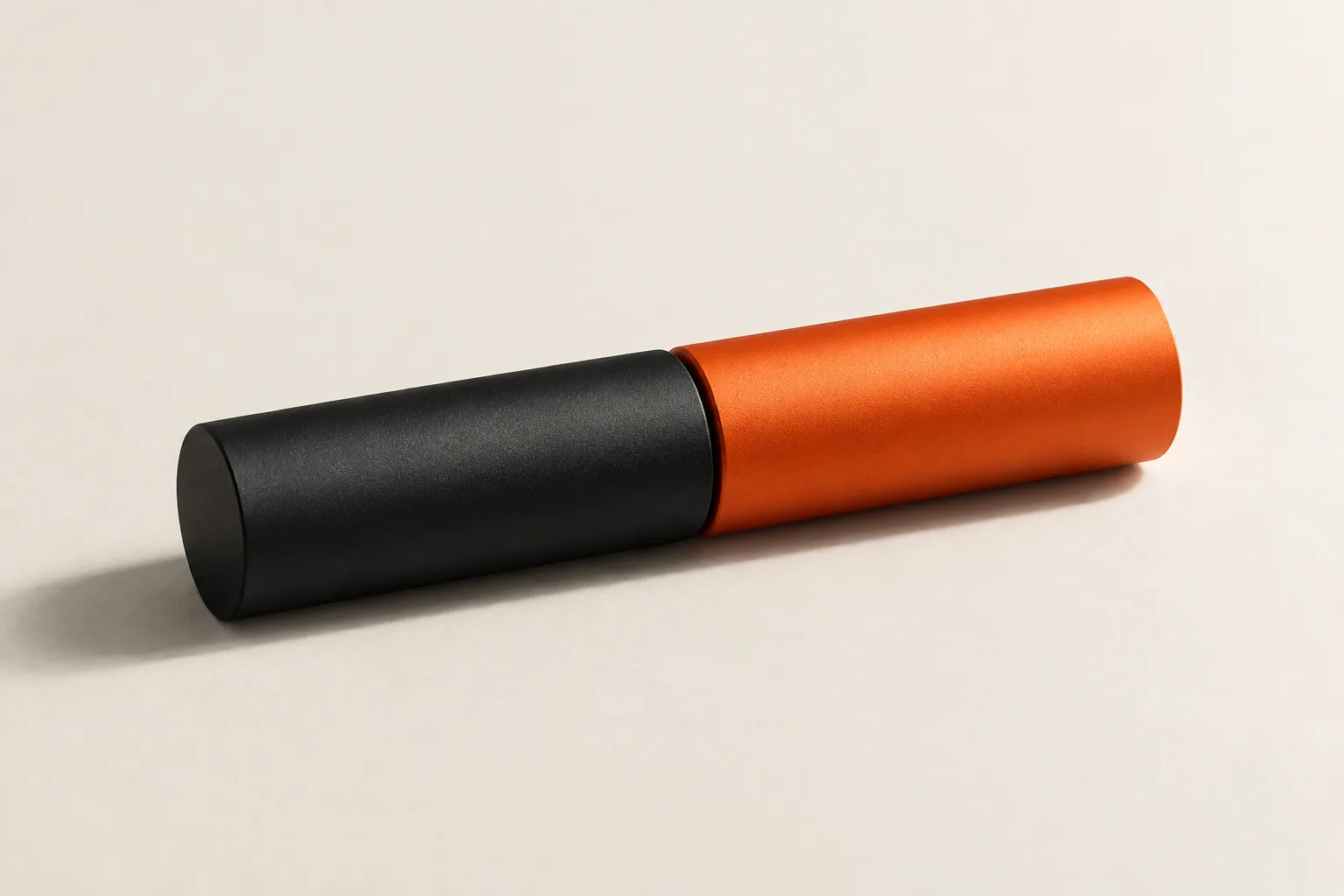
A black and an orange cylinder touching end to end: the handover from agent to recruiter.

What does the recruiter still do?

The recruiter owns judgement. They confirm the search strategy on a new or unusual role, check the ranking when the agent is unsure, adjust criteria when the market answers differently than expected, and hold every real conversation with a candidate. Interviews, assessment, offers and the final hiring decision stay with your team and the hiring manager.

The agent takes over the hours that go into building searches, reading hundreds of profiles, writing first messages and chasing replies: repetitive work that is easy to postpone. You configure how much control you keep at each step: see human-in-the-loop control and our security and compliance approach.

Which actions run automatically, and which need approval?

Approval rules are set per action. A team might approve every search strategy and every outreach message at the start, then let follow-ups run automatically once they trust the output. Low-confidence cases always go to a person.

  • Search strategy, candidate selection, outreach and handover each have their own rule
  • How finely rules differ per vacancy or client is agreed per implementation
  • Every ranking shows why a candidate was selected
How control works

Who is AIcruiters built for?

The platform pays off where sourcing is recurring work, not an occasional search.

Relevant from1+

LinkedIn Recruiter seator recurring manual sourcing capacity

  • Recruitment agencies

    Many open roles for several clients, where sourcing speed decides who presents the candidate first. See AI sourcing for recruitment agencies.

  • Staffing and secondment firms

    Recurring profiles and a constant need for fresh candidates. See staffing agencies.

  • In-house talent acquisition

    TA teams with hard-to-fill roles and limited sourcing capacity. See in-house talent acquisition.

  • Executive search

    Small long lists where evidence per candidate weighs more than volume. See executive search.

What does AIcruiters cost, and how do we start?

There is no public price list. Every team starts from a business case built on its own numbers: current Recruiter seats, the hours recruiters spend sourcing and the number of vacancies. The public sourcing savings calculator gives an indicative figure; the full reasoning is on the business case page.

Getting started follows three steps. First, a 30-minute demo on one of your own live vacancies, so you see the agent analyse, search and rank on a real role. Second, configuration of the standard platform around your criteria, workflows, tone of voice and approval rules. Third, a technical and privacy review in which hosting, data handling and any ATS connection are discussed. Whether your ATS gets a direct integration, a structured handover or another setup is assessed per ATS.

Questions about the AIcruiters platform

Is it an ATS?

No. AIcruiters is a sourcing layer that works before a candidate enters your pipeline. How warm candidates reach your ATS is assessed per ATS during implementation.

Can we reduce LinkedIn Recruiter seats with it?

Potentially. It depends on how your seats are used today and which activities the agent takes over. The comparison with LinkedIn Recruiter explains the trade-offs.

Is this standard software or a custom build?

Standard software: one sourcing foundation, configured around your vacancies, criteria, workflows, tone of voice and approval rules.

Who builds AIcruiters?

SocialFind, a recruitment agency that brings the sourcing practice, and UPPR, which builds production-grade AI agents. AIcruiters is based in the Netherlands and serves teams across the EU.

How quickly can we tell whether it works?

Start with one real vacancy and agree success criteria upfront: search quality, relevant profiles, response quality and recruiter time returned.

Last updated:

See the platform work on one of your own vacancies

Bring a live role. We show the agent analysing, searching and ranking, and map your seats and sourcing hours into an indicative business case.

Book a demo on your own vacancy30 minutes · your vacancy · your numbersOpen the calculator